
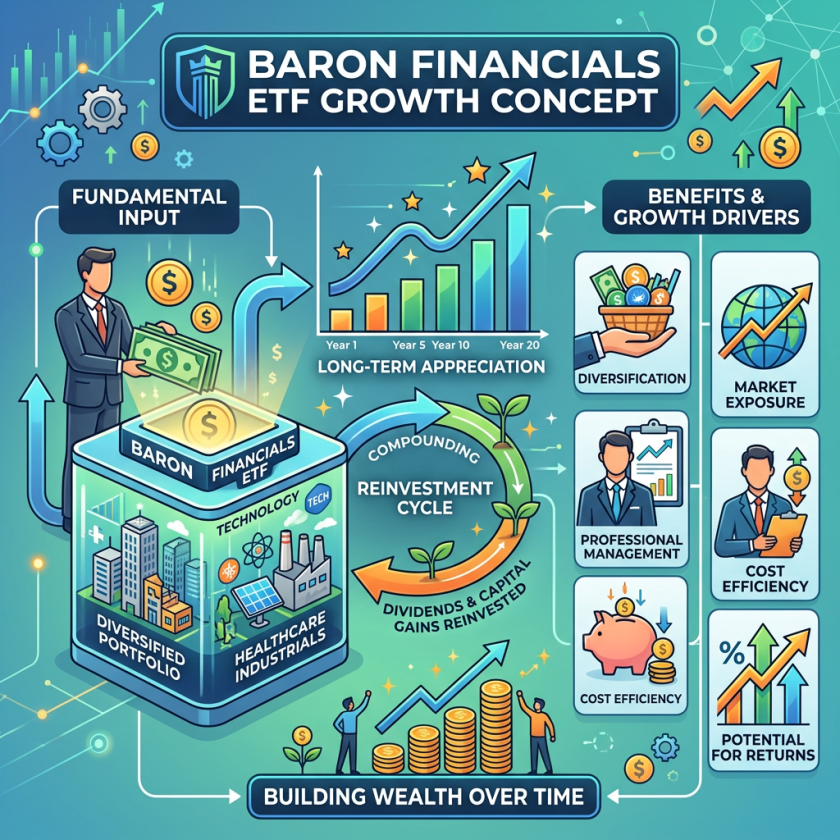
BCFN is not a plain-vanilla financials ETF. Its active, high-conviction structure means the fund can look very different from the sector benchmarks many investors already know. That matters because “financials” can be a blunt label: a portfolio tilted toward payments, data-enabled platforms, and selected growth franchises may behave differently from one dominated by banks and insurers.
The first issue for investors is concentration. A portfolio of a little over 40 holdings can be useful when the manager has a clear edge, but it also increases dependence on a relatively small set of stock-level decisions. In practice, that makes manager skill, research process, and portfolio turnover more important than they would be in a broader index fund.
A second issue is the role financials play in an overall allocation. A growth-oriented financials fund may diversify away from mega-cap technology, but it is still exposed to sector-specific risks such as credit cycles, regulation, payment-network competition, and changes in consumer and business spending. Investors should think about whether the fund complements existing equity exposures or unintentionally duplicates them.
Finally, active sector funds deserve a rebalancing lens. If the thesis is “next-generation financial services,” then the position may fit best as a satellite holding that is reviewed periodically rather than a set-and-forget core allocation. That approach helps investors keep the portfolio aligned with the intended style exposure instead of letting winners or losses dictate the sector mix.
Growth Beyond the Macro
Compared to passive financial sector ETFs, BCFN’s actively managed approach defines its holdings. The constituents in passive funds are often weighted toward traditional banks that are sensitive to interest rate swings. BCFN focuses on companies with strong growth prospects irrespective of the macroeconomic backdrop. Saltman emphasized that the fund’s strategy is to identify businesses using technology and innovation to disrupt or adapt with the new status quo. This includes looking beyond large-cap companies and into small- or mid-cap companies with strong growth prospects. As mentioned, this involves a rigorous research process to locate the financial industry’s next big opportunities and the incumbents positioned to withstand. “We do our own deep, fundamental research to understand our own industries and companies really well,” Saltman added, noting that Baron Capital takes a “top-down approach to identify attractive growth themes and a bottom-up approach to find the companies that are best able to capture those growth opportunities.”Modern Finance Enablers and Diversifiers
Saltman highlights that the fund targets companies that are benefiting from the secular shift toward electronic payments and digital data. This includes key holdings that investors will recognize like Visa and Mastercard, which are indirect plays on cryptocurrencies. “These companies are increasingly serving the cryptocurrency and blockchain ecosystem,” said Saltman. “Their cards can be used to purchase cryptocurrencies on exchanges like Coinbase and also spend cryptocurrency.” The fund also invests in companies with a global footprint in the financial sector. This includes Nubank and Mercado Libre, which have a strong presence in Latin America. “These companies are expanding the offering for financial services to an underserved part of the market in Latin America,” Saltman noted. Aside from these growth opportunities and indirect exposure to technological innovation, the financial sector as a whole diversifies from the ongoing hype surrounding AI as it generally continues to perform well even when growth is broadly underperforming. In the current times of volatility, sector diversification is imperative. “Investing in financials provides diversification beyond the AI trade,” Saltman said. “Financial services has not really participated in the AI buildout, but we believe that they will be primary beneficiaries of using AI to operate more efficiently and to improve productivity.”Enjoyed this article? Sign up for our newsletter to receive regular insights and stay connected.