
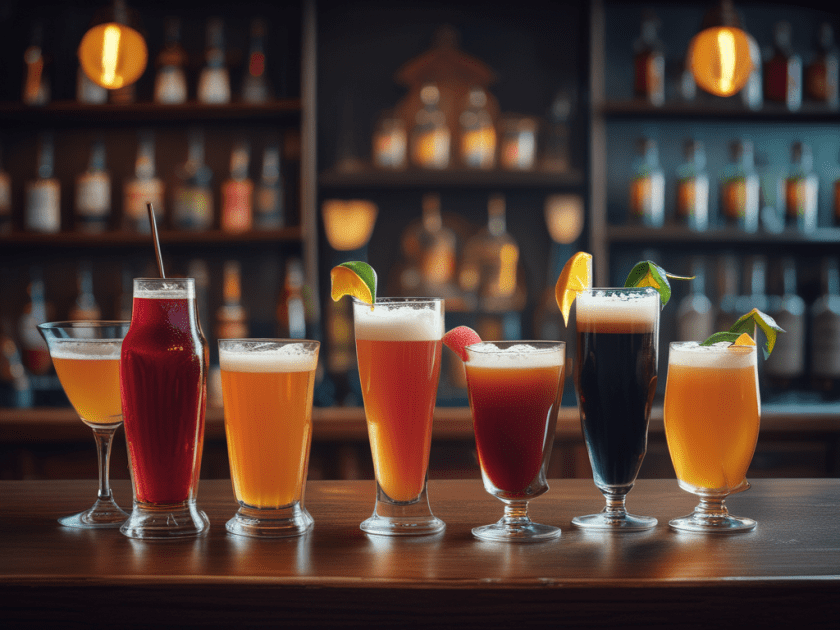
Are non-alcoholic beers and cocktails healthy?
Recently, I’ve tried to cut down on drinking, and have been enjoying the wide variety of non-alcoholic beers and cocktails now available. But are these actually healthy options? — Kris, Brooklyn, New York
I’ve always been a more moderate drinker myself, so as alcohol-free beverages have flooded the market, I’ve reveled in being able to have a drink with my pals without feeling like the odd one out. Sipping on soda water and lime on nights out always left me feeling like a buzzkill. Not so with a fancy craft mocktail.
Alcohol is increasingly understood to come with a litany of health risks. Recent studies have found that consuming even modest amounts confer risks to our hearts and brains and no amount of alcohol improves health. The question is no longer whether it’s bad for you; it’s how bad is it?
So, if you take the alcohol out of alcohol, are you left with something healthy? Or just not as bad?
To start, it’s worth noting that some products, like many non-alcoholic beers, actually remove alcohol, sometimes leaving small amounts. (By law, non-alcoholic beers can have as much as 0.5% alcohol by volume.) In other words, those non-alcoholic drinks still can have some small amounts of the thing you’re trying to avoid. There are some concerns in particular about these drinks for people recovering from addiction.
There’s also the other stuff that might be in a non-alcoholic beer or wine or sugary mocktail.
“Because non-alcoholic beers and spirts still contain calories, excessive amounts of these products can cause weight gain which in turn can result in health conditions including type 2 diabetes, hypertension and heart disease,” says Beth Czerwony, a registered dietitian with the Cleveland Clinic’s Center for Human Nutrition.
Non-alcoholic beer and wine in particular often have fewer calories than their alcoholic counterparts, but that’s still more calories than the seltzer with lime I was drinking on nights out before.
Other nutritional considerations for zero-alcohol beverages center around a higher sugar and carbohydrate content than is considered healthy. In general, non-alcoholic beers contain more than twice the carbohydrates of typical beer beverages, according to Laura Veach, a clinical addiction specialist and professor at Wake Forest University School of Medicine.
In sum, alcohol is certainly the biggest drawback to alcoholic drinks, but it might be a stretch to call its non-alcoholic counterparts “healthy.” — Kristen V. Brown
Enjoyed this article? Sign up for our newsletter to receive regular insights and stay connected.