
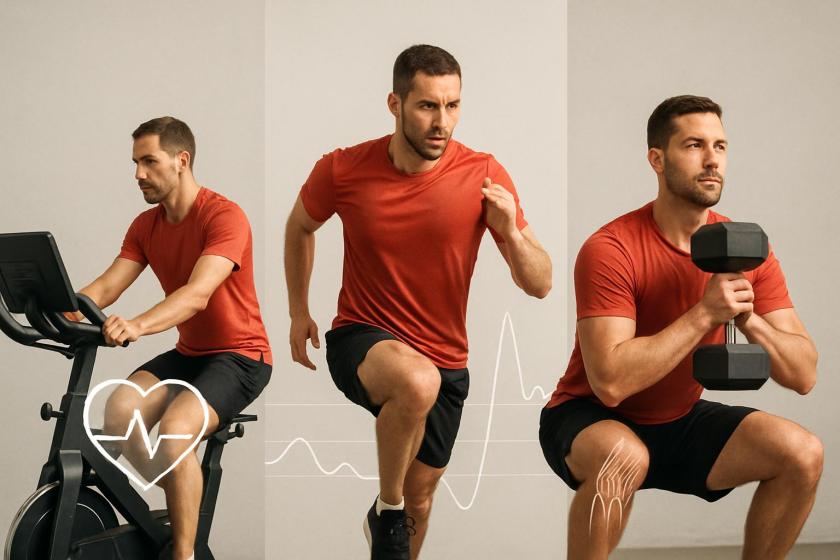
One useful takeaway here is not that any single workout is magical, but that different training styles may support different parts of fitness. That framing matters because longevity guidance often gets reduced to one metric or one trend. In reality, aerobic base work, higher-intensity efforts and strength training each stress the body in different ways, so a mixed routine is more plausible than a one-size-fits-all plan.
The evidence behind concepts like VO2 max and lactate threshold is strongest as a measure of fitness, not as a direct promise of longer life. Higher values are commonly associated with better health outcomes, but association is not the same as causation. These markers can also reflect other factors such as age, baseline health, body composition, training history and consistency, which is why they are useful for tracking progress but not for predicting individual outcomes on their own.
Another practical point is dose and sustainability. A three-part plan may sound efficient, but the best plan is the one a person can repeat safely. Intervals can be demanding, and strength work requires technique and recovery; both can be scaled to current fitness, injury history and time availability. For many readers, the real challenge is not choosing the perfect exercise mix, but arranging workouts so fatigue, sleep and soreness do not undermine adherence.
Nutrition and recovery are part of the training effect, not an optional extra. Under-fueling or piling on hard sessions without rest can blunt performance and increase dropout risk. That is why this kind of longevity advice is most useful when treated as a flexible framework: build an aerobic base, add controlled intensity, keep muscle strong, and leave room for recovery.
- A doctor to elite athletes shares his longevity formula, with Zone 2 cardio and smart interval training.
- Understanding your VO2 max and lactate threshold can help you train smarter.
- Raising your lactate threshold can help you level up in the gym.
Zone 2 builds stamina and heart health
The foundation of longevity fitness is the ability to keep up a slow, steady effort over time. The key here is Zone 2 cardio — exercising at 60-70% of your max effort, or a pace at which you can hold a conversation without getting out of breath. Zone 2 can help boost your VO2 max — the measure of how efficiently your body can use oxygen — a key indicator of heart health and fitness linked to better longevity. “You need to have a Zone 2 base,” Sprouse said, to “build the machinery that allows you to get fitter.” If you’re short on time, aimInterval training raises your lactate threshold
Shorter, higher-intensity bursts of effort challenge your heart and muscles differently, Sprouse said. That can help you raise your “lactate threshold” — the point at which fatigue sets in. In other words, if VO2 max is the engine, lactate threshold controls how much you can gun it when you’re working out. When you hit that threshold, your body runs low on oxygen and taps into glycogen (sugar reserves) stored in the muscles. Your limbs get heavier, and holding the pace becomes a slog. “That’s when you’re on a running clock of how long you can sustain that effort,” Sprouse said. “Lactate threshold is the true measure of fitness in the moment.” For best results, vary your training. Try 30 seconds of all-out effort, then rest and repeat. The next session, switch it up to three to five minutes of hard effort, or even 10 minutes at a race pace.Weightlifting for muscle and strength
Cardio isn’t enough on its own. Lifting weights strengthens muscles, controls blood sugar, and prevents injuries — all key for longevity. “To build VO2 max, you have to have muscle size. Lower fat means higher VO2 max,” Sprouse said. “All these things come together in this one number, and it’s great for benchmarking against the population where you stand.” You don’t need hours-long, daily gym sessions. Aim to hit the weights a couple of days a week, depending on your schedule. With the right strength training routine, you can be in and out of the gym in 30 minutes and still make progress. For more efficient strength workouts, focus on compound movements like squats, deadlifts, and presses that work multiple muscle groups at once.Don’t forget nutrition and recovery
Another example to follow from top athletes: recovery is as important as the workout. “The thing that the world’s best do better than the rest of us is recover,” Sprouse said. If you’re not resting or eating well, it can make it harder to meet your goals even if you’re doing everything right in the gym. Aim to eat enough protein, carbs, and calories to fuel your activities, without overdoing it on refined sugars and processed foods. “We’ll move the needle partially with exercise and partially with nutrition. If you just address one or the other, you’re only getting half of the bang for the buck,” Sprouse said.Enjoyed this article? Sign up for our newsletter to receive regular insights and stay connected.