
Busy professionals often struggle to maintain consistent exercise routines due to time constraints, long work hours, and fatigue. Fortunately, effective workouts do not require gyms, equipment, or long sessions. With a structured approach, short workouts can deliver meaningful health benefits.
Why Short Workouts Are Effective
Research shows that consistent, moderate-intensity exercise improves cardiovascular health, muscle strength, energy levels, and mental clarity. Even 15–20 minutes per session can produce results when performed regularly.
The 3 Rules for Busy Professionals
Consistency beats intensity
Short, repeatable workouts performed consistently deliver better long-term results than occasional high-intensity sessions. Consistency builds habits, improves adherence, and reduces injury risk. For busy professionals, showing up regularly matters more than pushing to exhaustion.
Compound movements
Compound exercises engage multiple muscle groups simultaneously, making workouts more time-efficient. Movements like squats, push-ups, and lunges build strength, coordination, and cardiovascular fitness together. This maximises benefits within limited time windows.
Progress gradually
Gradual progression allows muscles, joints, and connective tissue to adapt safely. Increasing duration or repetitions slowly prevents burnout and reduces the risk of overuse injuries. Sustainable progress is especially important for beginners returning to exercise after long periods of inactivity.
15-Minute Beginner Workout
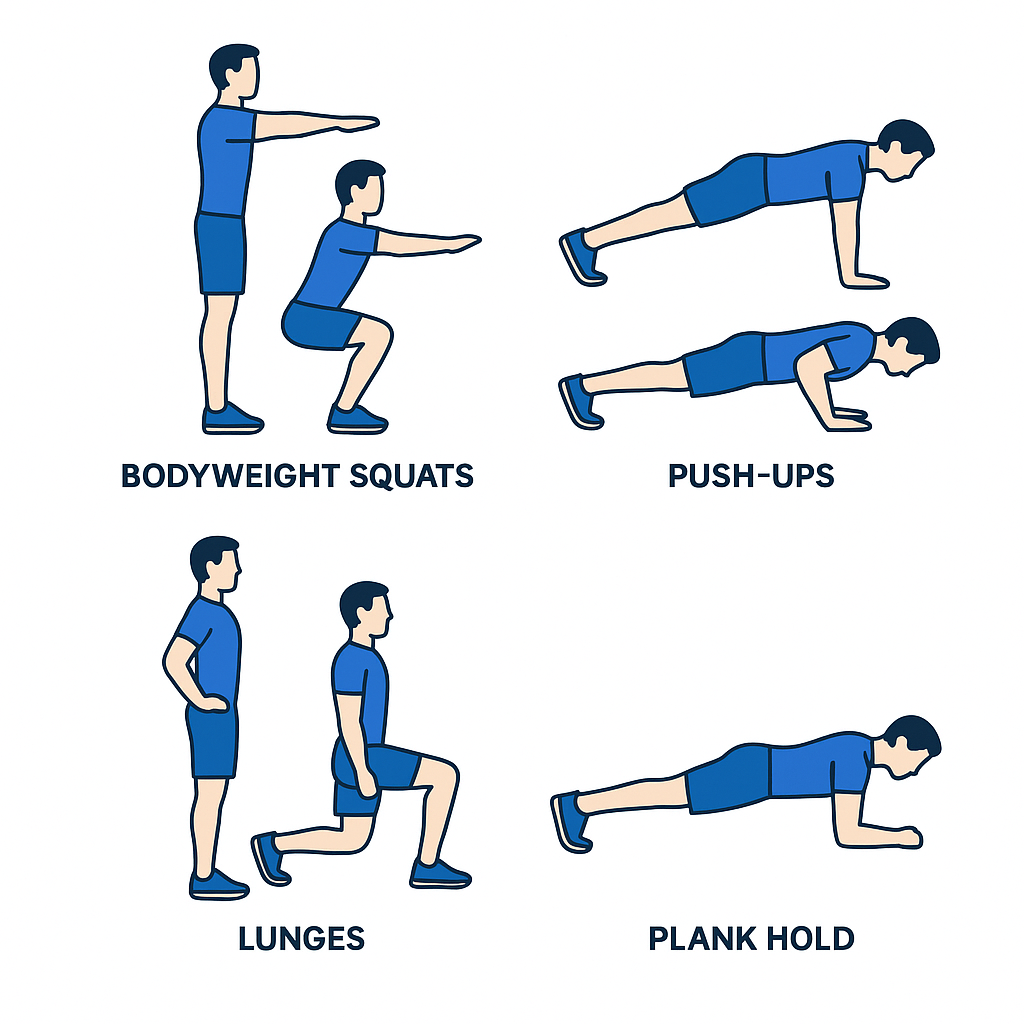
Bodyweight squats
Bodyweight squats strengthen the legs, glutes, and core while reinforcing proper movement mechanics. They improve lower-body strength essential for daily activities such as standing, lifting, and climbing stairs. Squats also elevate heart rate, contributing to cardiovascular fitness.
Push-ups (or knee push-ups)
Push-ups develop upper-body strength, targeting the chest, shoulders, arms, and core. Modified versions allow beginners to build strength without excessive strain. Over time, push-ups improve posture by strengthening stabilising muscles in the shoulders and torso.
Standing lunges
Lunges enhance balance, coordination, and unilateral leg strength. They help correct muscular imbalances created by prolonged sitting. Lunges also engage the core and improve hip mobility, which is essential for injury prevention.
Plank hold
Planks build core stability by engaging the abdominal muscles, lower back, and shoulders. A strong core supports better posture and reduces lower-back discomfort. Even short plank holds can significantly improve spinal support over time.
Marching in place or light jogging
This low-impact cardio movement increases heart rate and circulation without requiring space or equipment. It improves cardiovascular endurance and warms up the body. Marching is particularly suitable for beginners easing into aerobic exercise.
20-Minute Progression Plan
Once the 15-minute routine feels manageable, add an extra round or extend duration. This increases endurance and strength without adding complexity.
Flexibility and Recovery Add-Ons
Include short stretching sessions to improve mobility and reduce stiffness:

Hamstring stretches
Hamstring tightness is common among desk workers and contributes to lower-back strain. Stretching these muscles improves mobility and reduces pulling on the pelvis. Regular stretching enhances movement quality and comfort during daily activities.
Hip flexor stretches
Hip flexors shorten from prolonged sitting, tilting the pelvis forward and stressing the lower back. Stretching restores muscle length and improves posture. This is one of the most effective stretches for office-based professionals.
Spinal rotations
Gentle spinal rotations improve flexibility in the thoracic spine, which often becomes stiff from sitting. Increased rotational mobility reduces compensatory strain on the neck and lower back. This movement also supports breathing mechanics.
Neck and shoulder mobility drills
These drills relieve tension accumulated from screen use and desk posture. Improving neck and shoulder mobility reduces headaches and stiffness. Short mobility sessions can be performed multiple times throughout the workday.
Tracking Progress
Track workouts weekly rather than daily. Improvements in energy, posture, and endurance are often the first signs of progress.
Final Thoughts
Home workouts remove barriers to consistency. With short, structured routines and realistic expectations, busy professionals can improve strength, mobility, and wellbeing without disrupting their schedules.
Enjoyed this article? Sign up for our newsletter to receive regular insights and stay connected.