
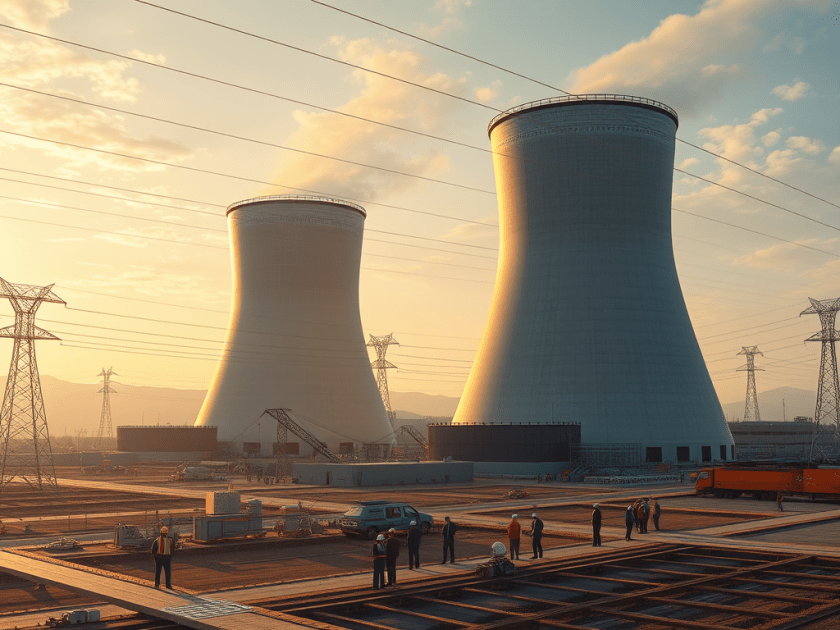
The global push to triple nuclear energy capacity has shifted from aspiration to a quantified roadmap.
Global nuclear capacity is on track to potentially reach 1,428 gigawatt electrical (GWe) by 2050, according to the “World Nuclear Outlook Report 2025,” released by the World Nuclear Association (WNA) at COP30. This projection significantly surpasses the 1,200 GWe goal previously endorsed by more than 30 countries.
Current global capacity is sitting at nearly 397 GWe across 440 reactors. So achieving these targets requires a robust infrastructure build-out. The WNA report emphasizes that while the target is achievable, the execution curve is steep. To succeed, new grid connection rates in 2050 must be more than four times the rate required in 2030. Geographically, the expansion is concentrated. That’s because China and the U.S. may account for more than half of total global nuclear capacity by 2050.
“Our analysis indicates that at least tripling nuclear capacity by 2050 is achievable with the timely action of bold global industry leaders, forward-thinking governments, and an increasingly engaged civil society. This is our chance to build a cleaner, more secure energy future for everyone everywhere, powered by affordable 24/7, low-carbon nuclear energy,” said Dr. Sama Bilbao y Leon, director general of the WNA.
Nuclear Investment Opportunities
For financial advisors, this data signals a massive, multidecade capital expenditure cycle. The investment opportunity extends beyond uranium spot prices into the complex industrial supply chain required to build and maintain these fleets.
Investors seeking targeted exposure to this broad ecosystem may consider the Range Nuclear Renaissance Index ETF (NUKZ). Its underlying index is the Range Nuclear Renaissance Index (NUKZX). The index is designed to track companies driving this expansion, providing exposure to companies involved in advanced reactors, utilities, construction and services, and fuel (read more).
By using a specialized index, NUKZ aims to capture the full value chain of the nuclear renaissance. Regulatory hurdles remain high. But the WNA report confirms that policy framework for a nuclear-heavy energy transition is firmly in place.
Enjoyed this article? Sign up for our newsletter to receive regular insights and stay connected.