
A rising wall of issuance from a handful of megacap technology names can change the shape of an investment-grade portfolio even when the bonds still carry familiar labels. For ETF investors, the issue is not just headline credit quality; it is concentration. When a small group of issuers supplies a growing share of supply, index-heavy bond allocations can become more exposed to a single industry’s financing cycle than their broad labels suggest.
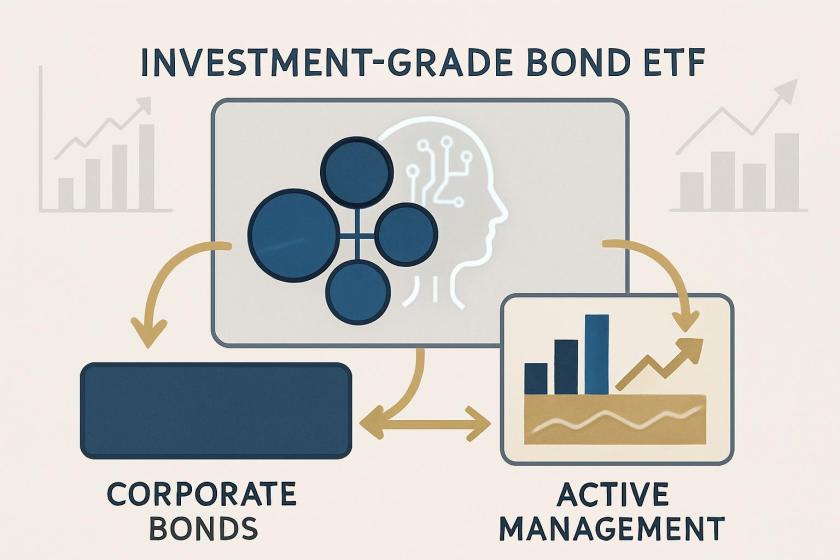
That is where active bond ETFs can add value as portfolio tools rather than as return-chasing products. A portfolio manager can assess issuer balance sheets, capital expenditure needs, refinancing calendars and structural seniority instead of owning every bond in proportion to market size. That matters when new issuance is large enough to influence spreads, sector weights and the mix of duration across an index.
Investors should also keep structure in view. Bond ETFs are not just wrappers; they are mechanisms for implementing a view on credit risk, liquidity and turnover. The creation/redemption process can support tax efficiency, while active trading can help a fund respond when bonds are called, repriced or become less attractive relative to alternatives. For long-term allocators, that flexibility can be useful in segments where index composition may lag changing fundamentals.
The broader lesson is practical: fixed-income diversification is not only about owning more bonds, but about owning the right mix of issuers, sectors and maturity profiles. In an environment where AI-related funding needs may ripple through the investment-grade market, investors may want to reassess whether passive exposure still matches their intended credit and concentration budget.
According to reporting from the Wall Street Journal, AI hyperscalers Amazon (AMZN), Alphabet (GOOGL), Oracle (ORCL), and Meta (META) have issued just under $90 billion in bonds. That total comes in higher than the total they’d sold over the last 40 months, the paper noted. Investors and advisors have taken note, with investors asking for higher yields from AI bonds than in previous months.
What Shifting AI Bonds Outlook Means for Investors
What does that mean for investors, then? Per Reuters, some analysts have noted that the sheer amount of investment-grade issuance from these firms could impact the overall investment grade landscape. That would complicate an uncertain rate outlook already facing a divided Fed and stubborn inflation, let alone potential further politicization of the central bank. Active ETFs may be able to help address risk stemming from AI bonds proliferation. Where many investors currently lean on passive bond funds to construct their overall debt allocations, active ETFs offer some key advantages. To begin with, ETFs provide greater tax efficiency and flexibility than mutual funds. Their tax advantages owe to their creation/redemption mechanism, which doesn’t produce taxable events like funds do when fund shares are sold. Most important, however, is active ETFs’ active investing freedom. Active ETFs can not only adapt to events or market shifts, like concern about credit quality, but also lean on fundamental research to get a deeper view into issuer health. While concern about AI bonds doesn’t necessarily stem from concern about AI tech firms’ overall health, that can be a large factor. On a basic level, too, where passive funds can struggle to maintain their bond allocations if bonds are called early, active funds can quickly adjust. The end of the year presents an opportunity for investors to refresh their portfolios. For those who remain largely exposed to passive, the new year may invite investors to shift into active.Enjoyed this article? Sign up for our newsletter to receive regular insights and stay connected.