
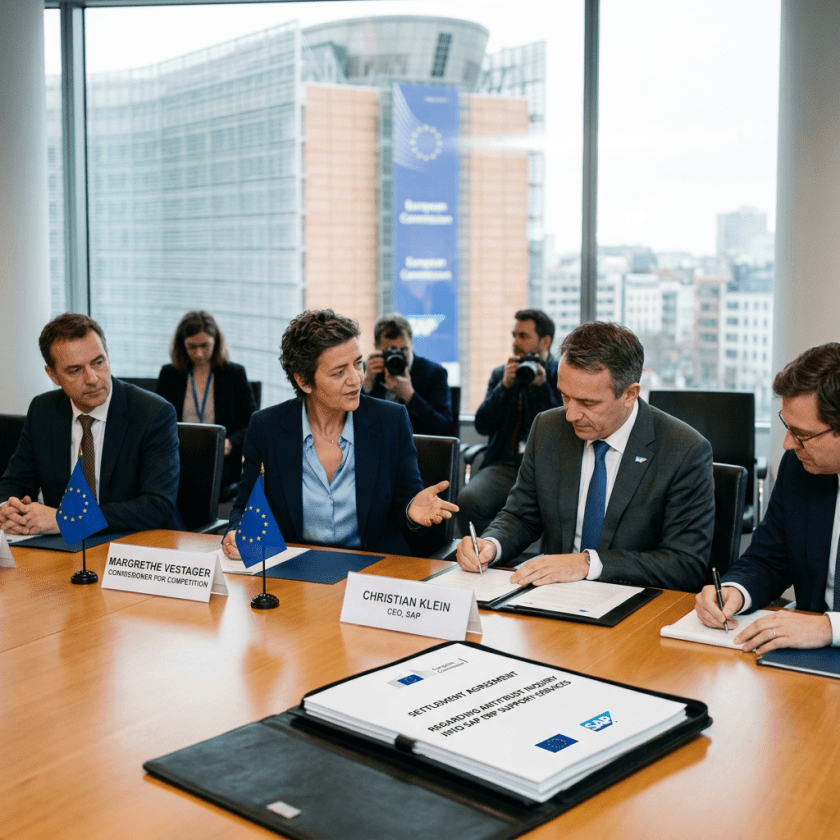
For CIOs and enterprise application leaders, the settlement is less a legal footnote than a governance reset. It weakens the assumption that ERP maintenance terms are fixed once the platform is embedded, which means contract oversight can no longer be treated as a procurement exercise handled at renewal time. Leaders should ask who owns support strategy across finance, operations, sourcing and transformation, and whether decision rights are clear enough to use the new flexibility without creating internal confusion.
The biggest management question is portfolio discipline. Greater freedom to split environments, terminate certain entitlements, or revisit support arrangements can release budget, but it can also fragment the operating model if applied piecemeal. The trade-off is straightforward: short-term savings and negotiating leverage versus the complexity of running mixed support structures, uneven service levels and more demanding compliance tracking. That makes benefits realisation and contract inventory management more important, not less.
This also changes how ERP modernization should be funded and sequenced. If maintenance spend can be reduced or redirected, the practical issue is whether the savings are captured centrally and reinvested into migration, data remediation and process redesign, or absorbed locally. CIOs should challenge business cases that assume support savings automatically translate into transformation capacity. The next questions are: which applications are truly strategic, which contracts are flexible, and what control points are needed to prevent tactical savings from undermining roadmap execution?
For vendor managers, the settlement is a reminder that leverage now depends on preparedness. Organizations that can quantify shelfware, support usage, migration status and business criticality will negotiate better than those relying on broad claims. The decision to stay, split, outsource support or accelerate modernization should be explicit, timed and measurable—not a default reaction to a contract event.
- Allowing customers greater flexibility to split SAP environments and use different support arrangements for different portions of their landscape.
- Eliminating reinstatement fees and reducing back-maintenance charges for customers returning to SAP support.
- Providing broader access to alternative licensing structures.
- Clarifying contract provisions related to support obligations and license terms.
- Allowing license termination in certain circumstances, including divestitures, insolvency situations, workforce reductions, reduced-support product phases, and some failed implementation scenarios attributable to SAP.
- This does not change SAP’s product roadmap.
- It does not delay ECC support deadlines.
- It does not reduce the strategic importance of S/4HANA.
- And it does not fundamentally alter SAP’s cloud-first direction.
SAP’s EU Settlement Shifts ERP Customer Leverage
Enjoyed this article? Sign up for our newsletter to receive regular insights and stay connected.