

Economic recovery in China is still a salient prospect, especially with the initial boost provided by the government’s emergence from a world burdened by COVID-19 limitations. This development has raised the outlook for companies like Alibaba (BABA) and Tencent (OTCPK:TCEHY), which have accelerated in recent times. However, this economic recovery has not gone smoothly and is currently faltering. For example, BABA is currently wading in a struggling Chinese e-commerce space while TCEHY fights an uphill battle against the market, which it’s presumably withstanding for idiosyncratic reasons. The anticipated post-COVID boom in China is turning out quite slow, and I think this government is due for a bumpy ride before recovery actually manifests. Therefore, I rate the iShares MSCI China ETF (NASDAQ:MCHI) a Sell.
In addition to the sluggish economy, I think MCHI may also adversely react to geopolitical tensions between both the United States and Taiwan. Geopolitical treachery could increase military spending and interfere with supply chains, which could hurt this ETF’s returns and slow down the already-struggling markets in China. China could still be a primary driver of innovation in fields like information technology and automotives, especially electric vehicles. However, the Chinese economy first needs to get its feet planted and deal with various political and economic hurdles, which could prove quite hard to jump.
The economic downturn is already taking a toll on the labor market and the corporate space in China, and geopolitical factors could add more fuel to the fire. Such implications may also worsen political instability, which has before been a problem for Chinese securities. With this in mind, more investors could turn away from MCHI and similar funds whose next moves are difficult to assess, and instead dabble in more stable emerging market ETFs. I discussed this same point in my piece on the Invesco China Technology ETF (CQQQ).
Strategy and Holdings Analysis
This ETF tracks the MSCI China NR USD index and uses a representative sampling technique. MCHI, therefore, aims to track its benchmark rather than beat it. This passive management strategy eliminates the chance that this ETF will outperform its index but also mitigates some of the risks associated with actively picking securities. This method further reduces the turnover rate in MCHI, which is roughly 13% lower than that of the iShares MSCI Emerging Markets ETF (EEM).
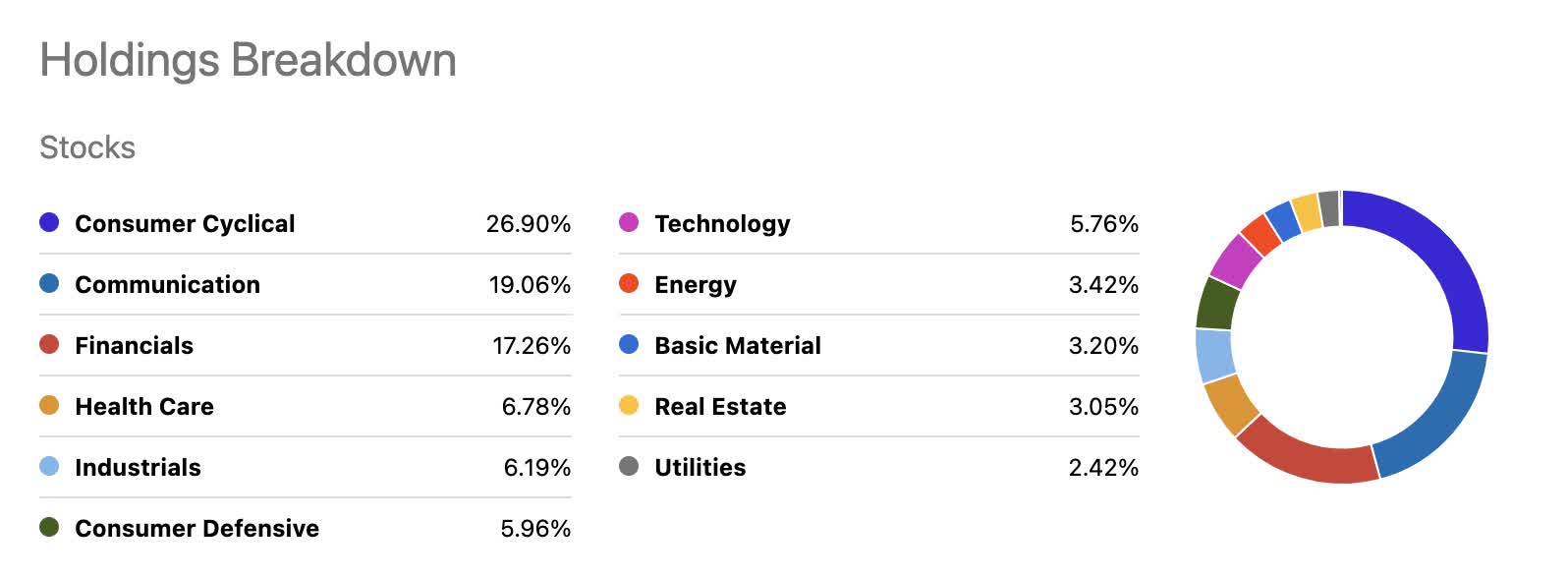
MCHI dabbles in a variety of sectors, the most represented being consumer cyclical, communication, and financials. These three sectors comprise almost two-thirds of this ETF, as seen below.
Seeking Alpha
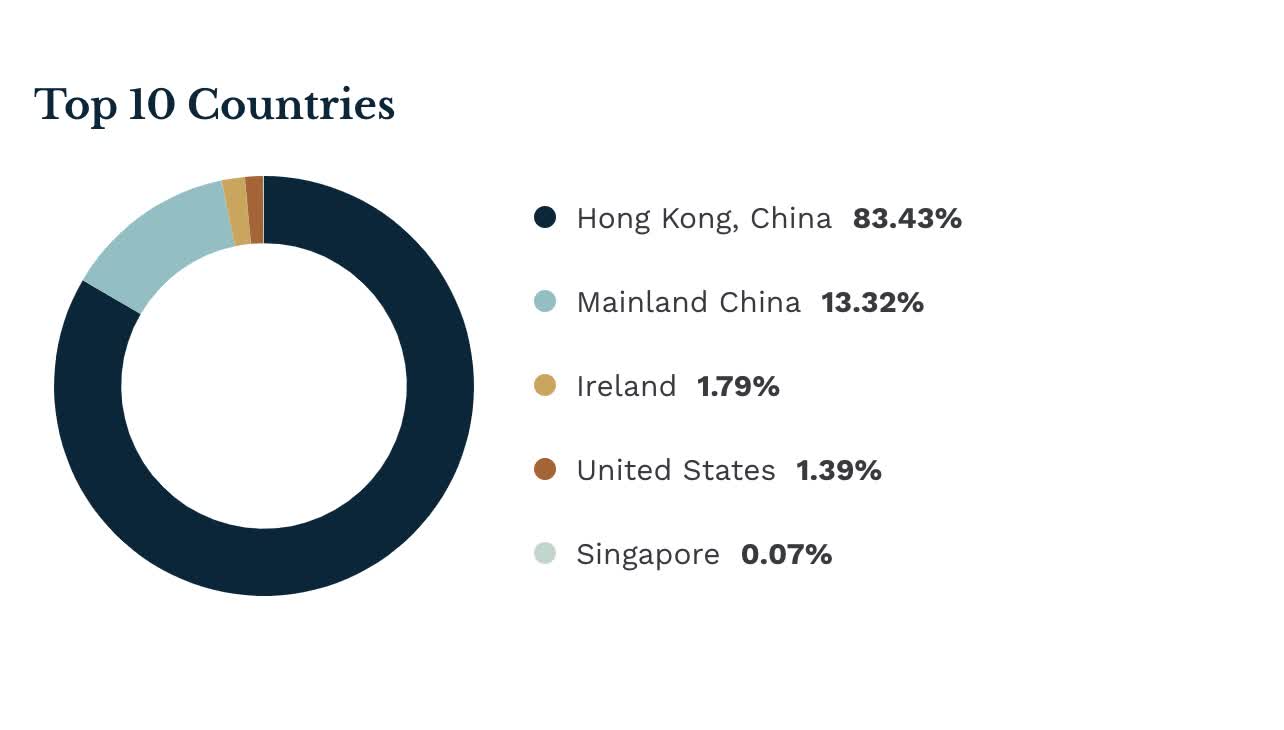
Such stocks are located almost exclusively in both Hong Kong as well as Mainland China.
etf.com
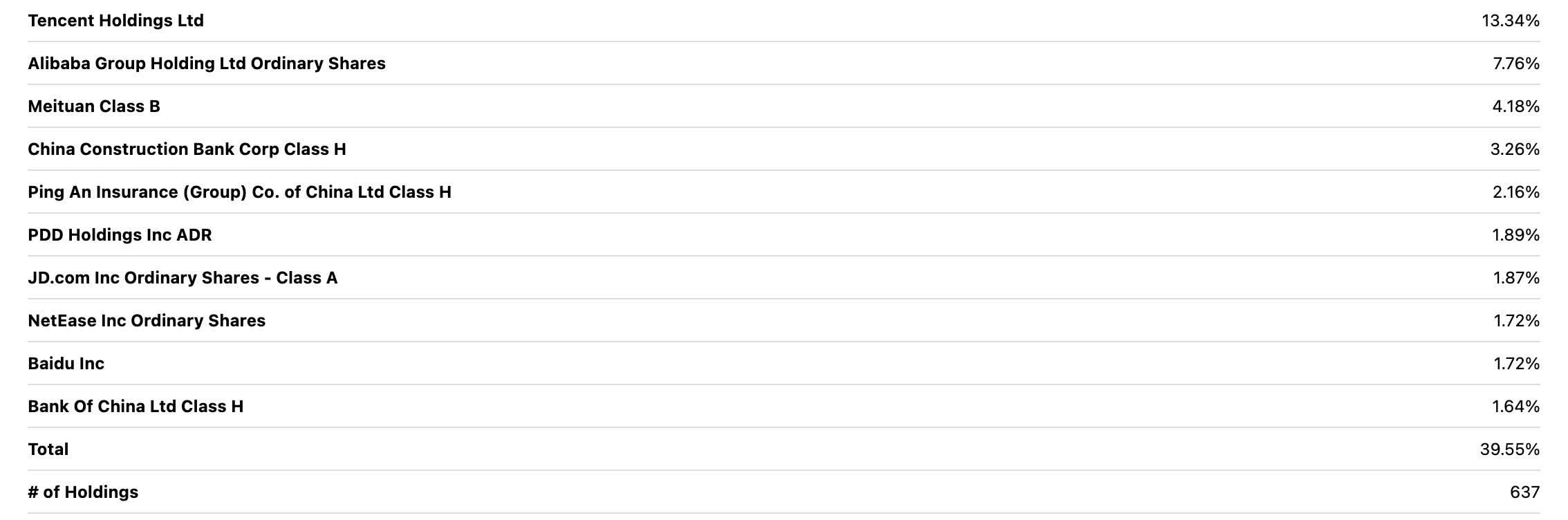
MCHI is quite top-heavy, as the top three holdings alone account for a quarter of this ETF. MCHI consists of over 600 holdings, the top 10 also comprising roughly 40% of the entire portfolio.
Seeking Alpha
Not only does this aspect spur concentration risk, but it also indicates that the larger majority of MCHI’s holdings will have virtually no impact on this ETF’s ultimate performance. This portfolio composition may also enhance MCHI’s volatility, which is already a cautionary note.

Seeking Alpha
GDP Growth Forecast
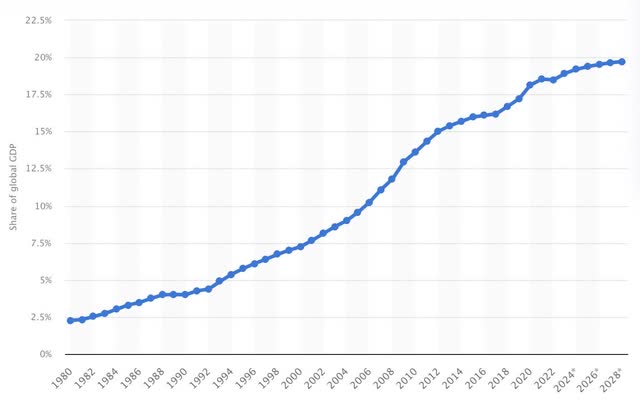
China is expected to become a top contributor to global GDP before the end of the decade, as depicted in the chart below.
Statista
Despite its political instability and the possibility of geopolitical interference, China’s economy could become a valuable space with time. Greater corporate profits could yield more investment opportunities for those dabbling in Chinese securities. However, more money flowing through this space does not necessarily mean greater returns for investors, or more lucrative jobs for those in China. As investigated in the next section, economic growth does not necessarily translate to a healthier labor market, which investors might want to consider going forward.
Youth Unemployment in China
China’s youth unemployment numbers recently hit 20%, shedding more light on the country’s deteriorating economy. This is primarily a result of the economy failing to keep up with the rapid influx of college graduates with high-value qualities like analytical and quantitative skills that would ideally be applied to intellectually stimulating jobs. College graduates in China are increasingly finding themselves in blue-collar jobs that were previously populated by relatively uneducated workers.
In the short to medium-term, this predicament could reduce the overall corporate activity within Chinese markets, which could lead MCHI and similar ETFs to become quite stale. Furthermore, youth unemployment’s contribution to a dissatisfied college graduate base could also become grounds for retaliation and subsequent government involvement. This could worsen the political instability within China and ultimately make MCHI more volatile and less profitable.
ETF Performance: MCHI’s Stability Problem
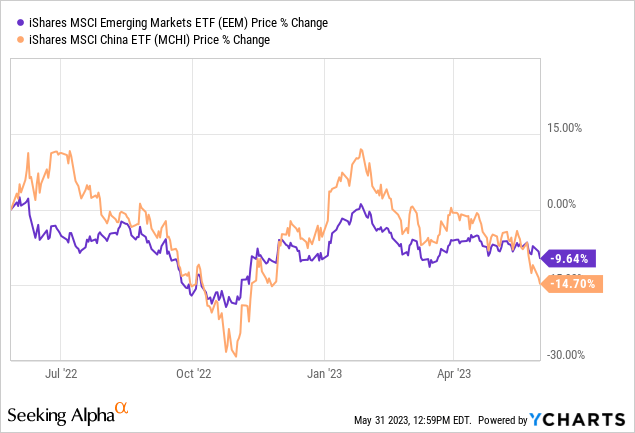
During the past year, MCHI has popped above and below EEM on numerous occasions.
Data by YCharts
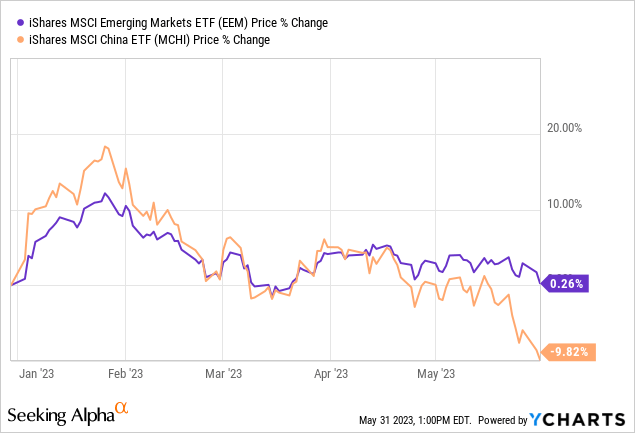
So far this year, MCHI has struggled to stay above EEM and has declined significantly in the last month.
Data by YCharts
MCHI’s price oscillations are evidently larger than that of EEM, indicating how China’s markets may move more erratically compared to other emerging markets. Especially as economic conditions in China become more treacherous, I believe MCHI has numerous disadvantages compared to emerging market funds with a broader focus.
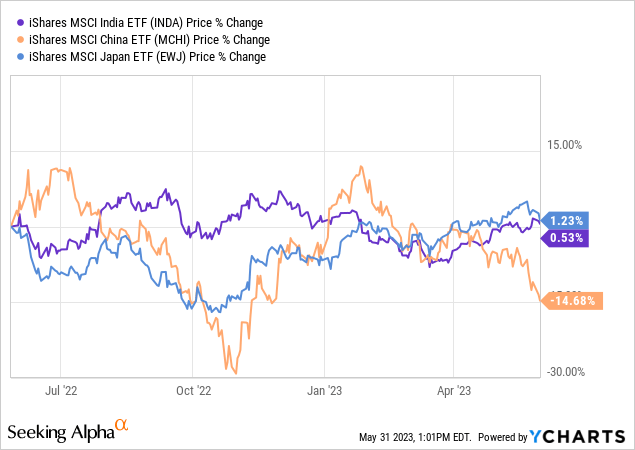
When comparing China’s economy to that of India and Japan, MCHI’s potential pitfalls come to an even greater light. When looking back a year, this ETF moves quite unpredictably compared to the iShares MSCI India ETF (INDA) and the iShares MSCI Japan ETF (EWJ).
Data by YCharts
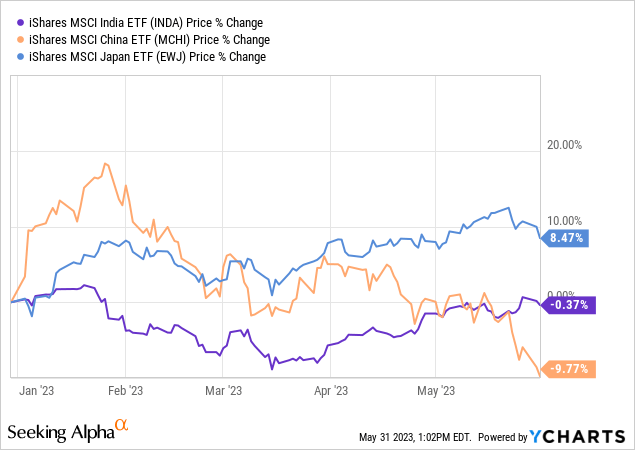
In 2023 alone, MCHI has dipped far below INDA and EWJ, and the ongoing geopolitical concerns and economic downturns could make this decline much worse sooner rather than later.
Data by YCharts
Pollution: A Cost Of Innovation In China
China’s strong GDP growth forecast may open some profitable avenues, but this is not likely to happen without considerable environmental sacrifices. China is already one of the most polluted countries in the world, and investments in artificial intelligence (AI), automotives, and other technology ventures could worsen their carbon footprint. In the long term, such sacrifices could bring heavy expenses to the Chinese economy, which could drag down MCHI even further. Such expenses may involve environmental cleanup costs and enhanced healthcare to battle pollution-induced illnesses. Furthermore, pollution could also jeopardize China’s tourism industry. This industry is responsible for consistently providing generous revenues year-round and still has room to grow.
Conclusion
China’s road to economic recovery has proven to be quite bumpy and is an outstanding threat to Chinese securities. Furthermore, I believe the medium-term is grim for China as they grapple with geopolitical tensions as well as domestic political and economic instability. For these reasons, I rate MCHI a Sell.
Editor’s Note: This article discusses one or more securities that do not trade on a major U.S. exchange. Please be aware of the risks associated with these stocks.
Enjoyed this article? Sign up for our newsletter to receive regular insights and stay connected.