
One useful way to read these launches is as a packaging test, not just a product roundup. The common thread is that each ETF is trying to make a very specific portfolio exposure easier to buy: a geopolitical supply-chain constraint, an emerging-markets research process, an active manager’s existing mutual fund, or a rules-based anti-disruption screen. For investors, that means the key question is less “is the theme interesting?” and more “does the fund’s construction actually isolate the intended exposure, or does it bundle in a lot of unrelated market risk?”
Methodology matters more than branding. In the emerging-markets examples, country and sector weighting can keep the portfolio closer to the broad benchmark even when stock selection is active. That can be helpful for discipline, but it also means the fund may not behave like a high-conviction thematic bet. By contrast, a niche resource or disruption-hedge strategy can become highly concentrated, which raises the stakes for position sizing and for understanding how much of the outcome is driven by a single supply chain, industry group, or factor sleeve.
The ETF wrapper adds another layer of due diligence. Investors should look beyond the story and ask how the vehicle is expected to trade, how broad the asset base is likely to be, and whether the strategy depends on a relatively small universe of eligible holdings. New launches can be attractive precisely because they are fresh, but early liquidity, wider spreads, and the possibility of closure are part of the implementation risk. For long-term allocators, these funds are best viewed as portfolio tools: useful when the exposure is clear, sized carefully, and fit into an existing allocation rather than replacing it.
Targeting the Geopolitical Supply Chain
First we discussed the Sprott Rare Earth Ex-China ETF (REXC). Think of this as the more targeted, politically sensitive sibling of the Sprott Critical Materials ETF (SETM ). REXC offers a concentrated, niche play designed to de-monopolize China’s heavy influence in the extremely important rare earths supply chain.
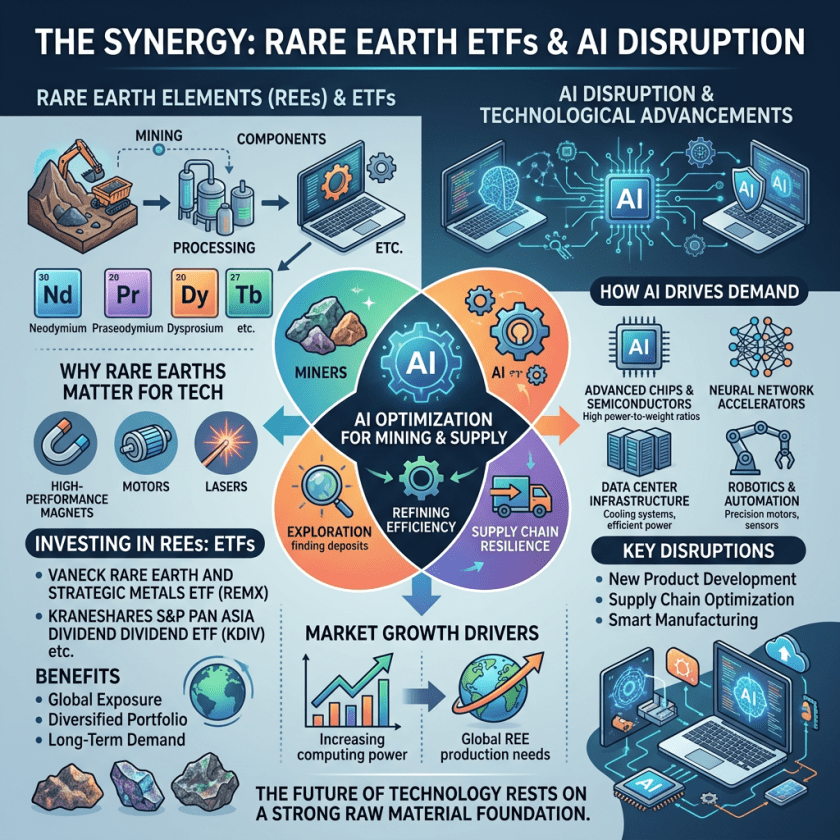
A group of 17 different minerals, rare earths are utilized in a variety of different industries. This includes applications in defense, AI, and clean energy technology. As countries continue to re-focus their priorities amid shifting economies and ongoing geopolitical challenges, ex-China supply chains will be at the center of policy, capital and strategic objectives.
The Institutional Lineup Extensions
We are also seeing legacy active powerhouses launch compelling sequels to popular strategies. T. Rowe Price, which just crossed the $25 billion ETF asset mark, recently introduced the T. Rowe Price Emerging Markets Equity Research ETF (TEMR). It is the direct emerging-markets relative of their $3 billion T. Rowe Price US Equity Research ETF (TSPA ).
TSPA has thrived by using an analyst-driven approach that allocates capital to roughly 30 equity research analysts based on the benchmark weight of the stocks they cover. TEMR uses a structured portfolio construction approach that weights each country, sector, and industry similarly to the MSCI Emerging Markets Index, attempting to add alpha purely through fundamental stock selection.
Meanwhile, the Baron Emerging Markets Select ETF BECM represents a major firm doubling down on its strengths. Baron made a splash when they came to market with their first suite of ETFs in December 2025, so it is great to see them continue to build out their lineup in 2026.
The firm has a strong heritage of active management. BECM’s manager has run the underlying $4 billion Baron Emerging Markets mutual fund strategy since 2011, bringing over a decade of proven active expertise to the ETF wrapper.
The Anti-AI Trade
Finally, active funds dominate the ETF launch conversation, but index innovation is still occurring. This week, the Tuttle Heavy Asset Low Obsolescence Index ETF (HALX) launched, designed as an explicit hedge against technological disruption. VettaFi is the index provider behind this immune-to- AI-disruption trade, tracking tangible companies that software simply cannot replace. This fund is not a sequel, but it still caught my attention.
They may not have the billions of Roundhill’s DRAM or ProShares’ IQMM yet, but for advisors looking for ETF innovation, these four funds are absolutely worth watching.
Enjoyed this article? Sign up for our newsletter to receive regular insights and stay connected.