
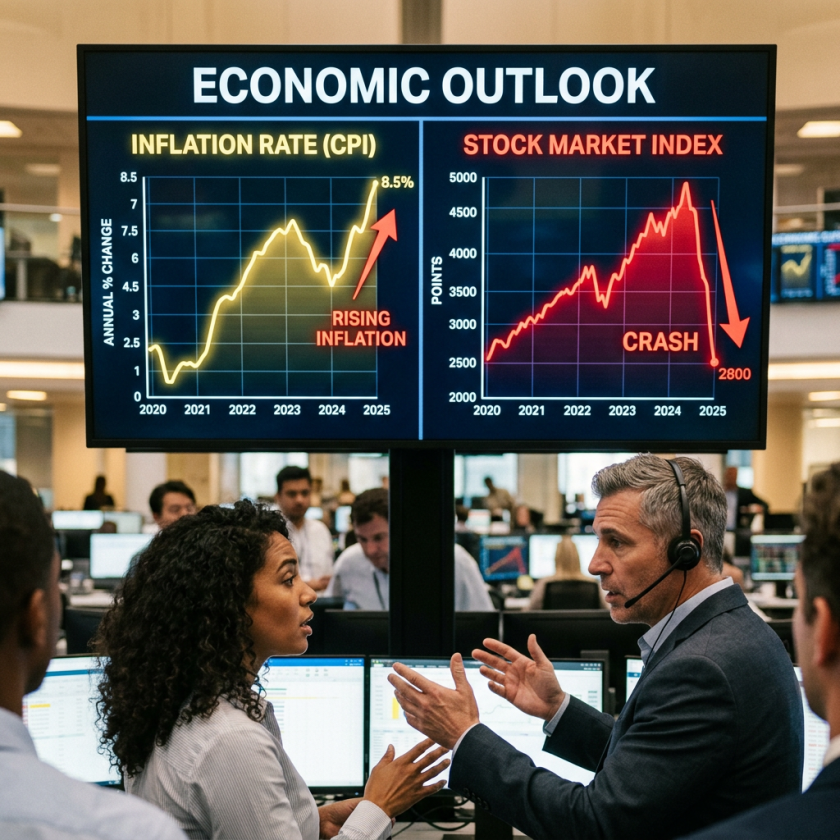
- Economist Nouriel Roubini warns inflation remains the top risk for markets.
- He sees the potential for CPI to rise to 5-6%, which could push the 10-year Treasury yield “closer to” 8%.
- Key inflation drivers include geopolitical tensions, deglobalization, and government spending.
Famed economist Nouriel Roubini, whose bearish forecasts on the economy have earned him the moniker of “Dr. Doom,” says inflation remains the biggest risk for markets.
In a July 9 interview with Business Insider, Roubini listed a handful of structural factors that he says will put upward pressure on consumer prices, potentially sending the consumer price index to levels around 5-6%, up significantly from June’s inflation rate of 3.5%.
Here’s what will drive inflation higher, according to Roubini:
- Geopolitical tensions. A prime example is the US-Iran war, which has driven oil and other commodity prices higher since March. Those increases directly impact consumers and threaten to leak into prices in other areas of the economy.
- Deglobalization. Governments continue to become more protectionist, reversing the deflationary force that has been deglobalization. Exhibit A: President Donald Trump’s tariff measures. “There’s a backlash against the free movement of goods, services, capital, labor, data, information, technology,” Roubini said. “All those frictions are to some degree inflationary.”
- Government spending. Government budget deficits and overall debt levels continue to soar as spending increases and higher interest rates balloon debt bills.
- Climate change. Rising global temperatures and extreme weather will lead to food supply shocks and higher insurance costs.
- Populist political leaders. “You have backlash against liberal democracy and democratic capitalism, so populist parties of either extreme right or extreme left are following policies that are gradually inflationary and anti-market,” Roubini said.
Roubini warned of drastic consequences for long-duration bond yields if inflation trends higher. A CPI of 5% to 6% would put the 10-year Treasury yield “closer to” 8%, he said. That would be their highest levels since 1994, and a dramatic increase from current levels around 4.58%.
“A few years ago they were at 1%, now they’re already at 4.5% and rising, and they’ll be gradually rising given all these different risks,” he said of 10-year bond yields.
Other structural factors beyond market forces could also push up yields, he said. For example, rising government debt levels mean the Treasury has to borrow more. Without a commensurate increase in demand, higher supply of bonds means higher yields.
An outcome where 10-year yields rise to the 8% range would likely be disastrous for stocks, as investors tend to measure the risk they’re taking in equities versus the risk-free rate of return offered in US Treasurys.
For now, Roubini’s view is far from consensus on Wall Street, and there are some barriers to inflation running as hot as he predicts.
Perhaps chief among them is the new Federal Reserve Chair Kevin Warsh, who has so far been much more of a policy hawk than markets were expecting. On Tuesday, he told Congress that the central bank will have “no tolerance” for inflation.
Another is artificial intelligence. Technology has historically been a disinflationary force, and AI is expected to boost productivity levels without a corresponding increase in labor costs. Roubini himself has acknowledged this competing force recently.
On Tuesday, inflation looked to be on the decline, as June’s CPI report came in at 3.5% year-over-year, down from 4.2% in May and much cooler than economists were expecting.
Roubini’s comments come has he launches a blockchain token backed by his Atlas America Fund. The ETF invests around Roubini’s inflation thesis, providing exposure to short-term Treasurys, REITs, gold, and commodities. Since launching in November 2024, it is up 9.1% while yielding 2.45% annually.
Enjoyed this article? Sign up for our newsletter to receive regular insights and stay connected.