

For architects and platform teams, the real design shift here is not “cloud or on-premises,” but how much control plane you are willing to centralize across very different failure domains. Azure’s adaptive model implies a single operating model spanning datacenters, edge sites, disconnected environments, and public cloud, which reduces tool sprawl but raises the bar for consistent identity, policy, and lifecycle management.
That architectural consistency matters most when workloads cross OT and IT boundaries. In practice, device registries, telemetry pipelines, and analytics layers must agree on naming, asset identity, and trust boundaries before data can be operationalized. The integration of local processing with downstream analytics also creates a familiar trade-off: lower latency and better resilience at the edge, but more distributed state to govern, secure, and troubleshoot.
For deployment teams, the operational question is how to standardize “connected” and “disconnected” estates without creating two separate platforms. Features such as unified management, cluster policy, secret handling, and migration tooling suggest a path toward repeatable rollout patterns, but only if organizations align network design, certificate lifecycle, and patching processes across every site. That makes automation and configuration drift control as important as the underlying infrastructure.
There is also a maintainability lens for long-term adoption. Bringing AI workloads closer to data sources can improve responsiveness, yet it increases dependency on local hardware capacity, observability, and recovery procedures. Teams evaluating this model should treat edge and private-cloud nodes as first-class production platforms, with the same discipline applied to versioning, access control, and service boundaries as in central cloud environments.
Meeting unique operational and data sovereignty needs
To address unique operational and data sovereignty needs, Microsoft introduced Azure Local—Azure infrastructure delivered in customers’ own datacenters or distributed locations. Azure Local comes with integrated compute, storage, and networking services and leverages Original Postroducts/azure-arc/?msockid=314ff59eaefb6dfc08e8e32eafce6cfe" target="_blank" rel="noreferrer noopener" shape="rect">Azure Arc to extend cloud services across the management, data, application, and security layers into hybrid and disconnected environments. Over the past six months, our team has significantly expanded Azure Local’s capabilities to meet requirements across industries. We are seeing tremendous momentum from customers like GSK, a global biopharma leader extending cloud innovation and AI to the edge using Azure Local. GSK is enabling real-time data processing and AI inferencing across vaccine and medicine manufacturing and R&D labs worldwide. GSK joined our What’s new in Azure Local session at Ignite last month, offering insight into how they are using Azure Local. We are also engaging deeply with public sector organizations to ensure essential services can run independent of internet connectivity when needed, from city administrations to defense and emergency response agencies. To support these customers, we are enabling a growing set of Azure Local features and functionalities across Microsoft and partners, many of which have reached General Availability (GA) and preview.- Microsoft 365 Local (GA) delivers full productivity—email, collaboration, and communications—within a private cloud, ensuring sovereignty and security for sovereign scenarios.
- Next-gen NVIDIA RTX PRO 6000 Blackwell Server Edition GPUs (GA) bring high-performance AI workloads on premises, enabling advanced analytics and generative AI without sacrificing compliance.
- Azure Migrate support for Azure Local (GA) streamlines lift-and-shift migrations, reducing costs and accelerating time-to-value.
- AD-less deployments, Rack-Aware Clustering, and external SAN storage integration (Preview) offer more options for identity, fault tolerance, and flexible storage strategies.
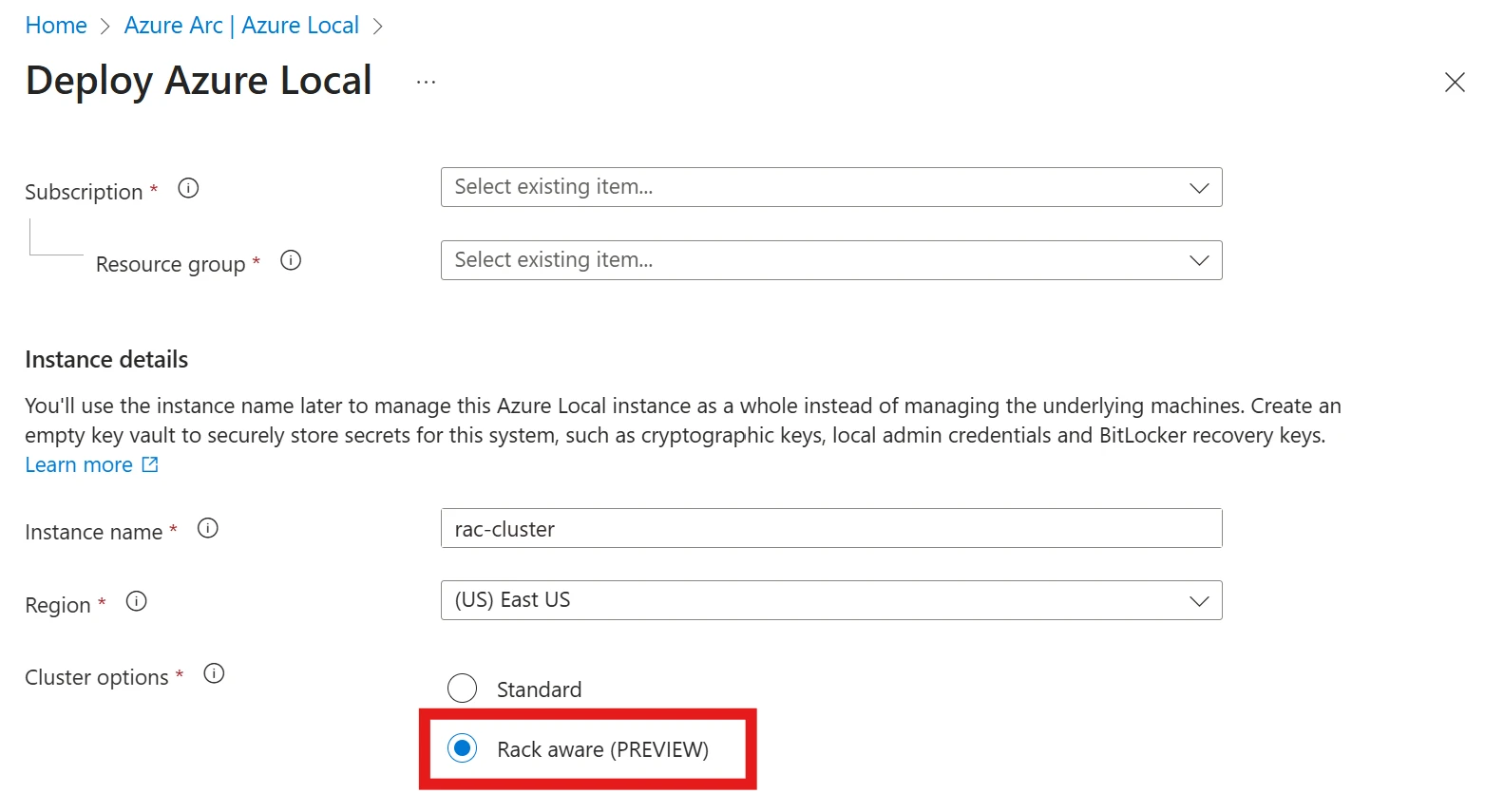 Rack aware clustering is now available in preview for Azure Local
- Multi-rack deployments (Preview) dramatically increase options for high scale, supporting larger IT estates in a single integrated Azure Local instance.
- Disconnected operations (Preview) delivers a fully disconnected Azure Local experience for mission-critical environments where internet connectivity is infeasible or unwanted.
Intelligent and connected physical operations
Azure’s adaptive cloud approach helps bring AI to physical operations. Our Azure IoT platform enables asset-intensive organizations to harness data from devices and sensors in a secure, scalable, and resilient fashion. When combined with Microsoft Fabric, customers get real-time insights from their operational data. This integration allows industries such as manufacturing, energy, and industrial operations to bridge digital and physical systems and adopt AI and automation in ways that align with their specific needs.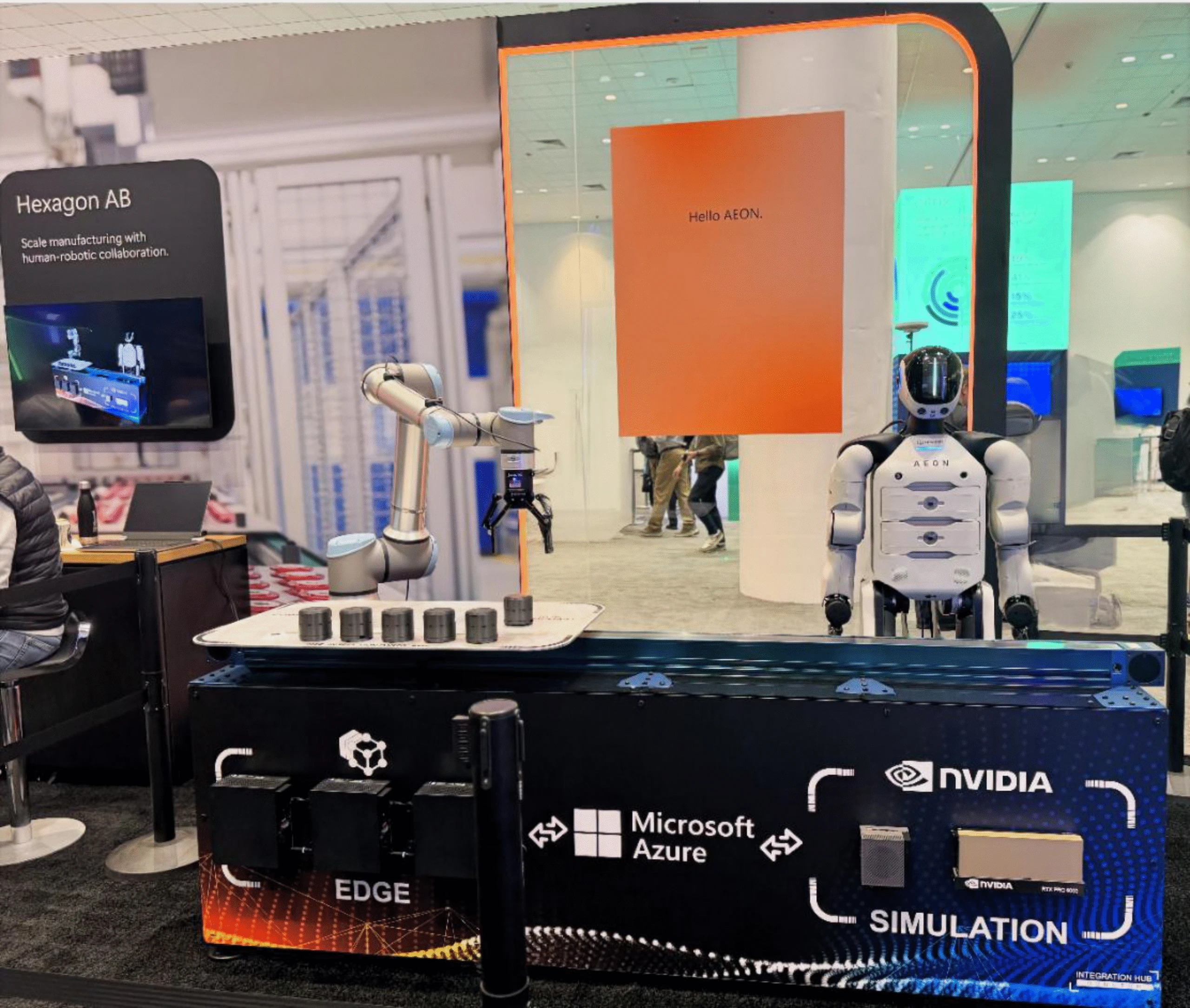 Demonstrating how the cloud, edge AI, and simulation can help orchestrate human-robotic collaboration on manufacturing product lines at Microsoft Ignite
Our approach to enable AI in physical operations environments follows two basic patterns. Azure IoT Operations enables device and sensor data from larger sites to be aggregated and processed close to its source for near real-time decision-making and reduced latency, streaming only relevant data to Fabric for more advanced analytics. Azure IoT Hub, on the other hand, enables device data to securely flow directly to Fabric with cloud-based identity and security. The integration across Microsoft Fabric and Azure IoT helps bridge Operational Technology (OT) and Information Technology (IT), delivering cost-effective, secure, and repeatable outcomes.
In the last six months, we introduced several enhancements to Azure IoT tailored for connected operations use cases:
Demonstrating how the cloud, edge AI, and simulation can help orchestrate human-robotic collaboration on manufacturing product lines at Microsoft Ignite
Our approach to enable AI in physical operations environments follows two basic patterns. Azure IoT Operations enables device and sensor data from larger sites to be aggregated and processed close to its source for near real-time decision-making and reduced latency, streaming only relevant data to Fabric for more advanced analytics. Azure IoT Hub, on the other hand, enables device data to securely flow directly to Fabric with cloud-based identity and security. The integration across Microsoft Fabric and Azure IoT helps bridge Operational Technology (OT) and Information Technology (IT), delivering cost-effective, secure, and repeatable outcomes.
In the last six months, we introduced several enhancements to Azure IoT tailored for connected operations use cases:
- In Azure IoT Hub, a new Microsoft-backed X.509 certificate management capability provides enhanced secure identity lifecycle control. Integration with Azure Device Registry streamlines identity, security, and policy management across fleets.
- Enhanced Azure Device Registry capabilities improve asset registration, classification, and monitoring for operational insight while allowing Azure connected assets and devices to be used with any Azure service.
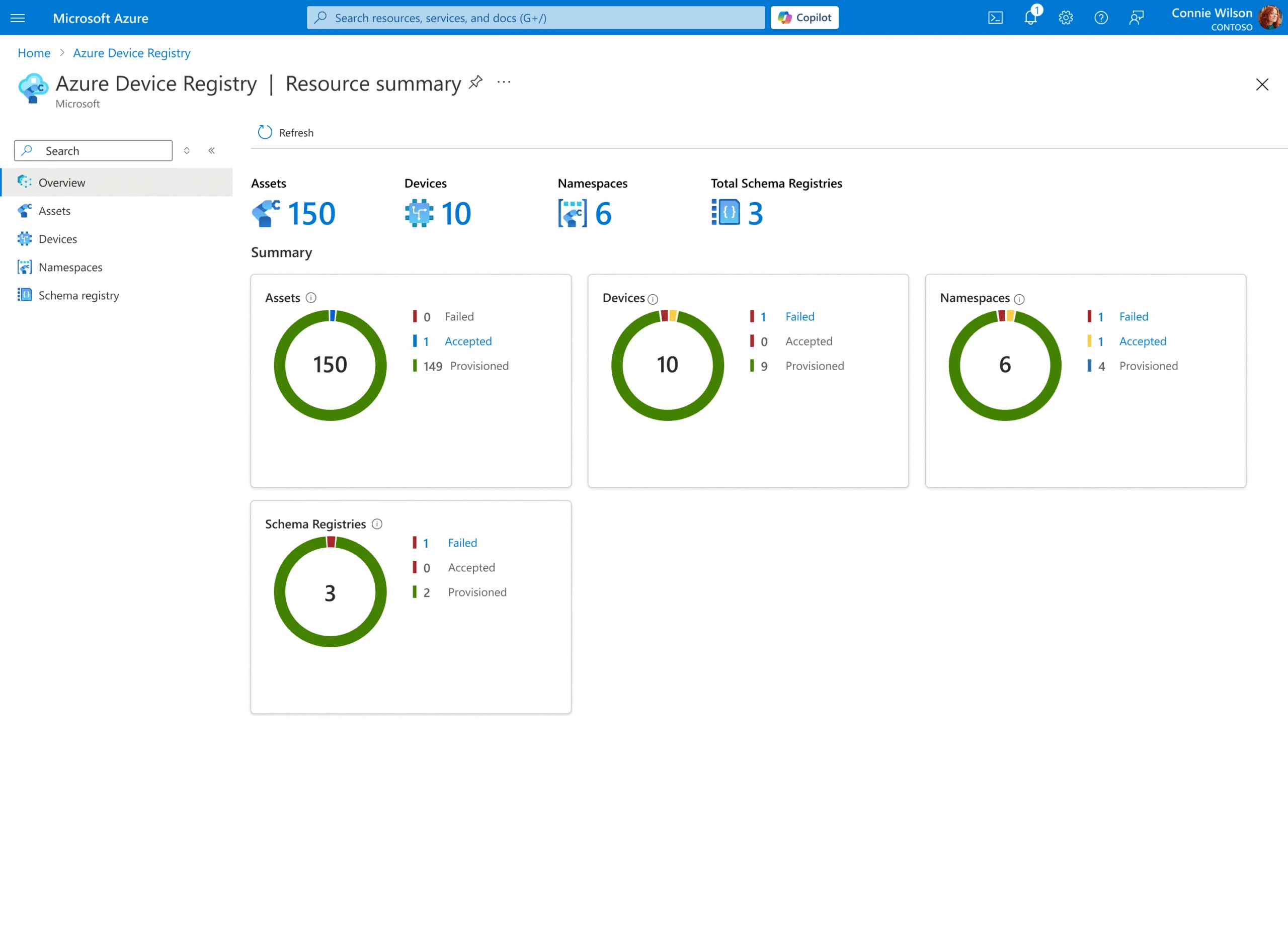 Azure Device Registry (ADR) acts as the unified control plane for managing both physical assets from Azure IoT Operations and devices from Azure IoT Hub
- Azure IoT Operations’ latest release includes a number of new features. WebAssembly-powered data graphs enable fast, modular analytics for near-instant decision-making. Expanded connectors for OPC UA, ONVIF, REST/HTTP, SSE, and MQTT simplify interoperability. OpenTelemetry endpoint support enables smooth telemetry pipelines and monitoring. Advanced health monitoring provides deep visibility and control over operational assets.
- In Microsoft Fabric, Fabric IQ and Digital Twin Builder turn raw telemetry into actionable context for simulation and intelligent feedback loops thanks to the use of models and knowledge graphs that bring clarity to streaming data.
Managing a distributed estate with unified Azure management and security
Organizations often grapple with the complexity of highly distributed IT estates—spanning on-premises datacenters, hundreds or sometimes thousands of edge sites, multiple public clouds, and countless devices. Managing and securing this sprawling ecosystem is challenging with traditional tools. A core promise of Azure’s adaptive cloud approach is helping to simplify centralized operations through a single, unified control plane via Azure Arc. Over the last six months, we have delivered a wave of improvements to help customers manage distributed resources at scale, across heterogenous environments, in a frictionless way. Key enhancements in our Azure Arc platform include:- Azure Arc site manager (Preview) organizes resources by physical site for easier monitoring and management of distributed operations.
- New GCP connector (Preview) projects Google Cloud resources into Azure for a single pane of glass across Azure, AWS, and GCP.
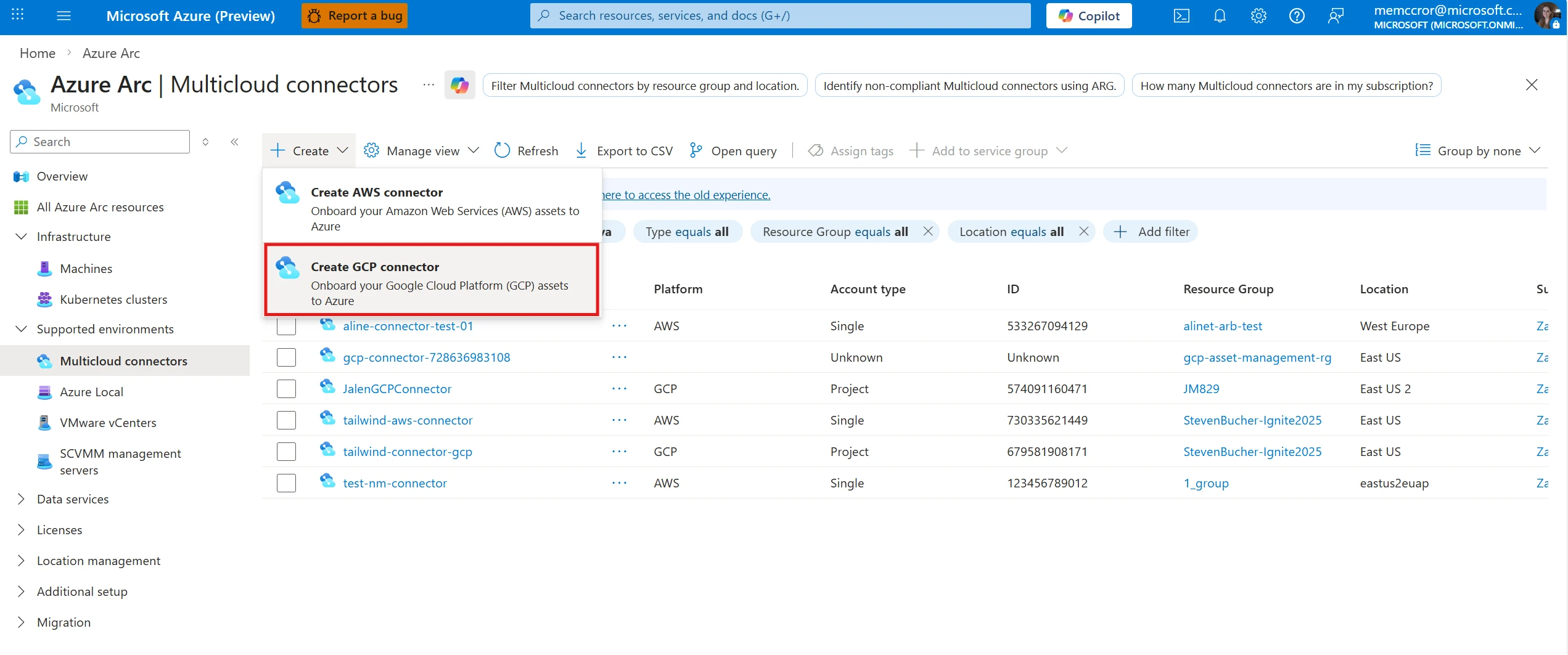 The Multicloud connector enabled by Azure Arc is now in preview for GCP environments
- Azure Machine Configuration (GA) enforces OS-level settings across Azure Arc-managed servers for compliance and security.
- New Azure policies to audit and configure Windows Recovery environment to be ready for critical patch to recover from machine unbootable state such as faulty drivers.
- New subscription level enrollment of essential machine management services with a simplified pricing model and a unified user experience from Azure for the hybrid environment, lowering adoption barrier for legacy environments.
- Workload Identity (GA) lets Azure Arc-enabled Kubernetes clusters use Entra ID for secure resource access, eliminating local storage of secrets.
- AKS Fleet Manager (Preview) integrates Azure Arc-connected clusters for centralized policy sync and deployments across hybrid environments.
- Azure Key Vault Secret Store Extension (GA) allows Azure Arc-enabled Kubernetes clusters to cache secrets from Azure Key Vault, improving security and workload resiliency to intermittent network connectivity for hybrid workloads.
New options for AI-powered innovation, resiliency, and control with Microsoft Azure
Enjoyed this article? Sign up for our newsletter to receive regular insights and stay connected.