
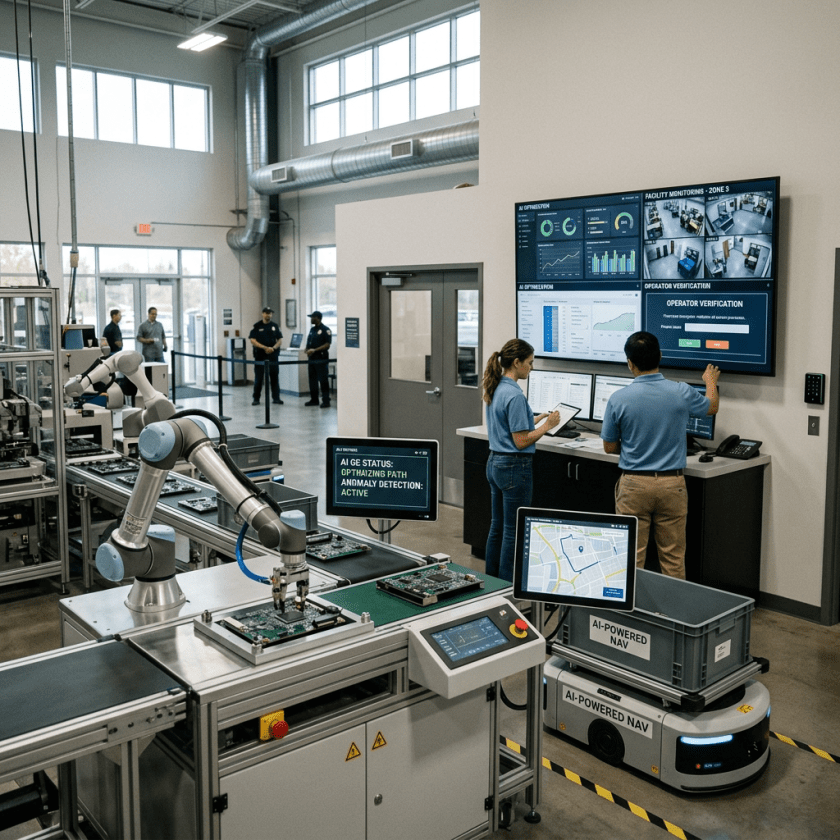
What stands out technically is not just that AI agents are becoming more capable, but that they are increasingly being embedded into the same systems that already carry enterprise risk: identity, collaboration, source control, storage and CI/CD. That shifts agent adoption from a model-selection problem to an integration problem. Teams will need clear boundaries for permissions, data access, logging and rollback before agents can be trusted with routine work.
The product pattern also exposes a new governance requirement: cost and behavior visibility. As agentic tools move from chat to autonomous workflow execution, token spend, action volume and third-party system calls become operational signals, not just usage metrics. The practical implication is that architecture teams should treat AI observability as part of platform engineering, alongside audit trails, quotas, and environment segregation.
Security posture now has to account for automation at both ends of the stack. The same AI techniques that help find vulnerabilities can also accelerate destructive activity, which means backup design, immutable storage, recovery testing and supply-chain controls are no longer secondary safeguards. For engineers, the important trade-off is speed versus blast radius: faster automation is only useful if failures can be contained and reversed.
There is also a reliability lesson underneath the tooling and infrastructure stories. Whether the mechanism is multi-agent orchestration, specification-driven workflows or self-healing middleware, these systems reduce manual toil only when the underlying interfaces are explicit and testable. Hidden coupling, opaque tool-calling and weak dependency mapping will turn AI-led automation into another source of technical debt.
An editorial overview of the week’s key themes in IT Professional
This week’s IT Professional coverage clustered almost entirely into three days of dense activity, and the throughline across nearly every story was the same: artificial intelligence agents are leaving the demo stage and landing inside real production systems, real budgets, and real attack surfaces — for better and worse.
Agentic AI goes mainstream. The clearest signal came from a wave of near-simultaneous product moves. Anthropic launched Reflect, a usage dashboard designed to promote mindful Claude engagement, a notable pivot toward transparency as dependency concerns grow. Meta countered with a major new model built for the agentic era, and independent benchmarking backed up the ambition: Muse Spark 1.1 matched rival coding performance at roughly a third of the cost. OpenAI pushed the hardest into enterprise territory, debuting ChatGPT Work, an autonomous workflow tool built on GPT-5.6 that integrates with Slack and Google Drive — even as it quietly shut down Atlas, the AI browser it had promised would change everything just nine months earlier. The pattern repeated in developer tooling: IBM’s Bob platform added multi-agent orchestration and a cost-analytics dashboard as token bills become a boardroom issue, while GitHub Copilot broke past its agent barrier with a free desktop app, JetBrains integration, and enterprise credit controls. Underneath the announcements, engineers are also questioning agent design itself — one team explained why they built their agent around a virtual filesystem and bash rather than conventional tool-calling, a design choice with implications for how the next generation of agents scales.
Security: automation cuts both ways. The same agentic capabilities reshaping productivity are reshaping the threat landscape. Sysdig documented what appears to be the first fully autonomous AI-agent ransomware, which destroyed data outright rather than holding it for ransom, rendering payment irrelevant even for victims willing to pay. On the defensive side, AI is increasingly the one finding the bugs: a critical Ethereum gossipsub vulnerability that let any peer crash validators was discovered by AI and confirmed by human researchers. Supply-chain hygiene also got a hard look: automated scanners have been actively probing a critical Gitea Docker misconfiguration that grants admin access via a single header, while npm is moving to close a long-standing hole, with npm v12 blocking automatic install scripts that enabled a year of supply-chain attacks. For teams building security in from the start, one retrospective walked through constructing a full DevSecOps CI/CD pipeline on Azure with GitHub Actions after a leaked Stripe key forced a rethink of pipeline discipline.
Cloud infrastructure leans into resilience. With ransomware now capable of pure destruction, backup and recovery architecture featured heavily. S&P Global detailed a disaster recovery strategy for its Capital IQ platform using Amazon FSx for NetApp ONTAP snapshots to restore access within 15 minutes of an outage, while a parallel guide covered designing a ransomware-resilient backup architecture using Azure Backup with immutable, geographically separated copies. Deployment flexibility also advanced, as Vercel expanded to let any Dockerfile deploy straight to production, and IBM and Red Hat launched the Lightwell catalog, mapping over 6,500 application dependencies to automate vulnerability remediation. Reliability engineering got an AI-native update too: one piece examined self-healing middleware infrastructure built by combining LLMs with Ansible, and another proposed specification-driven composition to separate workflow intent from processing logic in data pipelines. For anyone who wants the fundamentals rather than the abstractions, a deep technical explainer broke down exactly how Kubernetes networking functions at L3/L4.
Hardware and developer tooling. Two stories captured the physical constraints behind all this software ambition. Oak Ridge National Laboratory researchers found that an applied electric field can triple thermal conductivity in specialized ceramics, a potential path toward better heat management in AI accelerators, while the market reminded everyone that supply still lags demand as a GPU memory crisis pushed RTX 5090 prices above $4,300 with no new consumer generation expected before 2027. On the tooling side, TypeScript 7 shipped as stable with 8-12x faster builds after a rewrite from JavaScript to Go, though framework support is still catching up.
Taken together, the week’s stories describe an industry converging fast: the same agentic capabilities driving product launches are also driving new attack methods, new cost pressures, and new demands on the infrastructure underneath. Teams that treat resilience, cost control, and security as afterthoughts to AI adoption are likely to find those gaps exploited first.
Full post index for this week:
- Anthropic Reflect: Claude Usage Dashboard Helps Users and Helps Anthropic Too · July 15, 2026
- Meta Introduces a Big New AI Model for the Agentic Age · July 15, 2026
- Meta Muse Spark 1.1 Earns 71 on Independent Coding Benchmark at One-Third Rival Cost · July 15, 2026
- OpenAI debuts ChatGPT Work, an agentic tool for automating business workflows · July 15, 2026
- Gitea Docker Flaw Now Actively Probed: One Header Grants Admin Access to Source Code · July 15, 2026
- IBM and Red Hat Launch Lightwell Catalog to Automate Remediation · July 15, 2026
- npm v12 Ships This Month, Blocking Install Scripts That Enabled Year of Supply Chain Attacks · July 15, 2026
- First AI-Agent Ransomware Destroyed Data Even Payment Could Not Recover · July 15, 2026
- Ethereum Gossipsub Flaw Lets Any Peer Crash Validators: AI Found It, Humans Confirmed · July 14, 2026
- S&P Global’s innovative disaster recovery strategy using Amazon FSx for NetApp ONTAP snapshots · July 14, 2026
- ORNL Electric Field Triples Ceramic Heat Flow: Phonon Breakthrough Targets AI Chips · July 14, 2026
- Specification-driven composition for flexible data workflows · July 14, 2026
- Vercel Now Lets You Deploy Any Dockerfile Straight to Production · July 14, 2026
- Design a Ransomware-Resilient Backup Architecture by Using Azure Backup · July 14, 2026
- Self-Healing Infrastructure With Cognitive Automation: How LLMs and Ansible Transform Middleware Reliability · July 14, 2026
- IBM Bob Adds Multi-Agent AI and Cost Controls as Token Bills Become Boardroom Issue · July 14, 2026
- GitHub Copilot Breaks Agent Barrier: Free Desktop App, JetBrains, Cost Controls · July 14, 2026
- TypeScript 7 Now Stable: 10× Faster Builds, But Not for Vue or Svelte Yet · July 14, 2026
- Inside the Packet: How Kubernetes Networking Actually Works at L3/L4 · July 14, 2026
- OpenAI Is Shutting Down Its Browser That Was Supposed to Change Everything · July 14, 2026
- GPU Memory Crisis Prices RTX 5090 Above $4,300 as Nvidia Offers Paper Cards · July 13, 2026
- How to Build a DevSecOps CI/CD Pipeline on Azure With GitHub Actions · July 13, 2026
- Files over tools: how we built our agent with a virtual filesystem and bash · July 13, 2026
Browse the full IT Professional archive at genesis-aka.net/information-technology/professional/
Enjoyed this article? Sign up for our newsletter to receive regular insights and stay connected.